 |
|


|
|


I'm Online Chat Now
Certification


Fmoc-L-Pro-D-Pro-OH HPLC 98%+ Fmoc-AA Impurity Research
|
Product Details:
Payment & Shipping Terms:
|
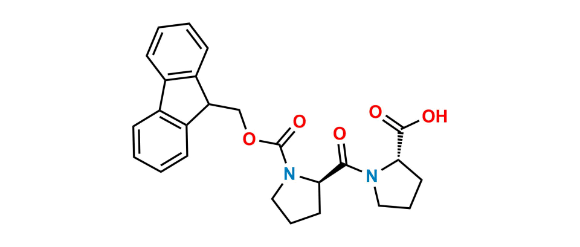

Detailed Product Description
| Product Name: | Fmoc-L-Pro-D-Pro-OH | CAS No: | NA |
|---|---|---|---|
| M.W: | 434.5 | Appearance: | White Powder |
| HPLC: | 98% | Storage: | Room Temp |
| Highlight: | Fmoc-L-Pro-D-Pro-OH HPLC impurity,Fmoc-AA impurity research chemical,Fmoc amino acid with 98% purity |
||
Fmoc-L-Pro-D-Pro-OH HPLC 98%+ Fmoc-AA Impurity Research
High-purity Fmoc-L-Pro-D-Pro-OH for advanced Impurity Research and pharmaceutical development.
| Name | Fmoc-L-Pro-D-Pro-OH |
|---|---|
| CAS NO | NA |
| Molecular Weight | 434.5 |
| Appearance | White Powder |
| HPLC Purity | 98%+ |
| Synonyms | Fmoc-L-Pro-D-Pro-OH |
Key Applications
1️⃣ Solid-Phase Peptide Synthesis (SPPS)
-
Used as a dipeptide building block in Fmoc-based solid-phase peptide synthesis
-
Enables direct incorporation of an L/D-configured Pro–Pro motif, minimizing racemization and coupling inefficiencies associated with stepwise amino acid assembly
-
Particularly useful for:
-
Proline-rich peptide sequences
-
Improving synthetic efficiency and sequence accuracy
-
2️⃣ Conformational Control and Turn Modulation
-
Proline imposes strong conformational rigidity due to its cyclic pyrrolidine ring
-
The L-Pro–D-Pro motif is known to:
-
Promote specific turn geometries, often distinct from D-Pro–L-Pro
-
Modulate backbone dihedral angles and local folding patterns
-
-
Widely applied in peptide folding studies and conformation–function investigations
3️⃣ Cyclic Peptide and Peptidomimetic Design
-
Employed in:
-
Cyclic peptide synthesis
-
Conformationally constrained peptidomimetics
-
-
Benefits include:
-
Improved proteolytic resistance
-
Enhanced structural definition and target selectivity
-
4️⃣ Protein–Protein Interaction (PPI) Modulation
-
Proline-rich motifs frequently participate in protein–protein interaction interfaces
-
The L-Pro–D-Pro dipeptide can:
-
Mimic non-canonical turn structures
-
Serve as a scaffold element in the design of PPI modulators or inhibitory peptides
-
5️⃣ Proline-Rich and Collagen-Related Peptide Models
-
Used as a model unit to study:
-
The influence of proline stereochemistry on peptide folding
-
Structural differences between L/D vs D/L Pro-Pro motifs
-
-
Valuable in collagen-mimetic and proline-rich peptide research
Packaging Options

Transportation
Small packages (1g, 25g, 1Kg, 25Kg) can be shipped by Express (DHL, FedEx, EMS, etc.). Large packages (100kg and more than 100Kg) can be transported by Air or Sea. All transportation is arranged according to customer requirements.
Company Profile
Contact Details
SICHUAN HONGRI PAHRM-TECH CO., LTD
Contact Person: admin
Send your inquiry directly to us
More Impurities(Standards)
-
Fmoc-β-Ala-D-Tyr(Et)-OH SPPS Building Block Impurity
-
Fmoc-β-Ala-Gln(Trt)-OH Liquid Phase for Peptide Synthesis CAS 2411591-25-6
-
Fmoc-β-Ala-Gly-OH HPLC 99%+ Liquid Phase for Peptide Synthesis CAS 133368-47-5
-
Fmoc-D-Pro-L-Pro-OH HPLC 98%+ Fmoc-AA Impurity Research
-
Fmoc-β-Ala-Tyr(tBu)-OH HPLC 98%+ HNMR In Accordance with Structure Fmoc-AA Impurity
-
Fmoc-β-Ala-Trp(Boc)-OH HPLC 98%+ HNMR Fmoc-Trp(Boc)-OH Impurity