 |
|


|
|


I'm Online Chat Now
Certification


Icotrokinra Oral Peptide Drug Amino Acid Derivatives Fmoc-Lys(Ac)-OH CAS NO. 159766-56-0
|
Product Details:
Payment & Shipping Terms:
|

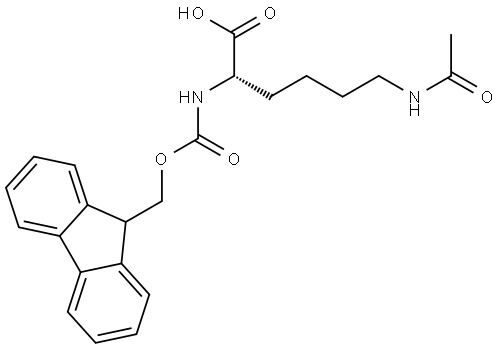
Detailed Product Description
| Product Name: | Fmoc-Lys(Ac)-OH | CAS No: | 159766-56-0 |
|---|---|---|---|
| M.W: | 410.46 | MF: | C23H26N2O5 |
| Appearance: | White Powder | Purity: | 99+ |
| Highlight: | Fmoc-Lys(Ac)-OH oral peptide drug,Icotrokinra amino acid derivatives,Fmoc-Amino Acids with CAS 159766-56-0 |
||
Product Description
Icotrokinra Oral Peptide Drug Amino Acid Derivatives Fmoc-Lys(Ac)-OH CAS NO. 159766-56-0
Name: Fmoc-Lys(Ac)-OH
CAS NO: 159766-56-0
M.W: 410.46
Appearance: White Powder
Purity: 99+
Synonyms: Fmoc-Lys(Ac)-OH
Application
1. Why is Lys(Ac) used in oral peptide drugs like Icotrokinra?
Icotrokinra (JNJ-77242113) is an oral IL-23 receptor antagonist peptide. Unlike traditional injectable peptides, oral peptide drugs require extensive structural optimization to improve gastrointestinal stability, permeability, and pharmacological performance. Acetylated lysine derivatives such as Lys(Ac) can be introduced into peptide sequences to regulate physicochemical properties and improve peptide behavior.
Optimization of peptide conformation: Lysine normally carries a positively charged side-chain amino group, while acetylated lysine provides a neutral amide structure. This modification can influence local charge distribution, intramolecular interactions, peptide folding, and overall three-dimensional conformation, helping maintain the optimal structure required for receptor binding.
Improvement of metabolic stability: Free lysine residues may participate in enzymatic recognition or unwanted interactions during metabolism. Acetylation of the lysine side chain can reduce protease recognition, decrease nonspecific degradation, and improve peptide stability, which is particularly valuable for oral peptide development.
Regulation of physicochemical properties: Compared with unmodified lysine, Lys(Ac) has reduced positive charge and altered polarity. This adjustment can influence solubility, membrane interaction, and permeability, which are important factors for improving oral peptide drug properties.
2. Role of Fmoc-Lys(Ac)-OH in peptide synthesis
Fmoc-Lys(Ac)-OH is mainly used as a specialized building block in Fmoc solid-phase peptide synthesis (Fmoc-SPPS). During peptide assembly, the Fmoc group protects the α-amino group, while the acetylated side chain prevents unwanted reactions during coupling.
A typical synthesis process includes resin loading, Fmoc deprotection, coupling of Fmoc-Lys(Ac)-OH, repeated peptide chain elongation, cleavage, and purification to obtain the final modified peptide API.
Compared with conventional lysine derivatives, Fmoc-Lys(Ac)-OH provides additional structural control and allows chemists to precisely tune peptide properties through side-chain modification.
3. Manufacturing challenges of Fmoc-Lys(Ac)-OH
The production of Fmoc-Lys(Ac)-OH requires strict control of acetylation efficiency, impurity profile, and product consistency. Key challenges include incomplete acetylation, residual starting materials, related impurities, and maintaining high purity during purification.
During peptide synthesis, the presence of modified lysine residues may also influence coupling efficiency and impurity formation, requiring optimization of coupling conditions and process control.
Important quality parameters include HPLC purity, assay, identity confirmation by MS/NMR, residual solvents, and related impurity control.
Package

Transportation
Small package(1g, 25g, 1Kg, 25Kg) can be shipped by Express. (DHL, FedEx, EMS, etc.)
Large package(100kg and more than100Kg) can be transported by Air or Sea.
All transportation is in accordance with the customer's needs.
Company Profile
Contact Details
SICHUAN HONGRI PAHRM-TECH CO., LTD
Contact Person: admin
Send your inquiry directly to us
More Fmoc-Amino Acids
-
98+ White Powder Fmoc-D-Val-OH CAS NO. 84624-17-9
-
98+ White Powder Fmoc-L-VAL-OPFP CAS NO. 86060-87-9
-
White Powder Purity 98+ Fmoc-Isovaline-OH CAS NO. 857478-30-9
-
White Powder Fmoc-Val(3-OH)-OH 98+ Fmoc Protected Amino Acids CAS 1217603-41-2
-
98+ White Fmoc-Derivatives Fmoc-L-Val-OH CAS NO. 68858-20-8
-
Powder Fmoc Derivatives 98+ Purity Fmoc-DL-Ala-OH CAS NO. 35661-38-2